Oracle, MySQL, Cassandra, Hadoop Database Training Classes in Training/Buffalo,

Learn Oracle, MySQL, Cassandra, Hadoop Database in Training/Buffalo and surrounding areas via our hands-on, expert led courses. All of our classes either are offered on an onsite, online or public instructor led basis. Here is a list of our current Oracle, MySQL, Cassandra, Hadoop Database related training offerings in Training/Buffalo: Oracle, MySQL, Cassandra, Hadoop Database Training

We offer private customized training for groups of 3 or more attendees.

Oracle, MySQL, Cassandra, Hadoop Database Training Catalog

cost: $ 495length: 1 day(s)
We all know - Big Data is here in a Big way. However, processing that data can still be a Big challenge. This ...
cost: $ 1190length: 3 day(s)
In this 3-day course, students will learn how to use Redis's data types efficiently to manage large data sets. Get an understanding why you should use Redis... Learn how to work with Redis data structures and Web applications support and maintenance Learn about Redis Web applications support and components... Learn how to use search-based applications and how to reduce memory use... Learn major ...
cost: $ 1090length: 3 day(s)
The Cassandra (C*) database is a massively scalable NoSQL database that provides high availability and fault tolerance, as well as linear scalability when adding new nodes to a cluster. It has many powerful capabilities, such as tunable and eventual consistency, that allow it to meet the needs of modern applications, but also introduce a new paradigm for data modeling that many organizations do ...
cost: $ 1090length: 3 day(s)
This course introduces the Apache Spark distributed computing engine, and is suitable for developers, data analysts, architects, technical managers, and anyone who needs to use Spark in a hands-on manner. The course provides a solid technical introduction to the Spark architecture and how Spark works. It covers the basic building blocks of Spark (e.g. RDDs and the distributed compute engine), as ...
cost: $ 1190length: 3 day(s)
This course provides an in-depth introduction to the Structured Query Language, or SQL. Students learn key concepts of relational databases and query design, and have extensive opportunities to write database queries. The course also introduces table design and database update statements. ...
cost: $ 790length: 2 day(s)
The Introduction to SQL with PostgreSQL course provides an in-depth introduction to SQL and relational databases, focusing on PostgreSQL as the database management system. The course covers essential topics such as querying and sorting data, filtering records with WHERE, advanced SELECT statements, subqueries, joins, unions, and conditional processing using CASE. Students will also learn to ...
cost: $ 1090length: 2 day(s)
The ability to write the SQL language the cornerstone of all relational database operations is essential for anyone who develops database applications. In this training course, you learn how to optimize the accessibility and maintenance of data with the SQL programming language, and gain a solid foundation for building, querying, and manipulating databases. ...

Cassandra Classes

cost: $ 2250length: 3 day(s)
The Cassandra (C*) NoSQL database is one of the most powerful and widely used non-relational databases available today. It is a fault tolerant, highly scalable database with tunable consistency that meets the demanding requirements of the "can't fail, must scale" systems driving growth for many of the most successful enterprises of today. However, along with that capability comes a new ...
cost: $ 2250length: 3 day(s)
The Cassandra (C*) NoSQL database is one of the most powerful and widely used non-relational databases available today. It is a fault tolerant, highly scalable database with tunable consistency that meets the demanding requirements of the "can't fail, must scale" systems driving growth for many of the most successful enterprises of today. However, along with that capability comes a new ...

Hadoop Classes

cost: $ 1590length: 3 day(s)
Implement Hadoop Solutions throughout the enterprise If you're ready to make the most out of massively scalable analytics, you need to know how to take advantage of Hadoop technologies. With this class, you'll learn how! It focuses on the architecture and approaches for building advanced, Hadoop-based enterprise applications, taking a deeper, code-level dive into delivering real-world solutions. ...

Linux Unix Classes

cost: $ 1890length: 3 day(s)
This course covers the essentials of deploying and managing an Apacheâ?¢ Hadoop cluster. The course is lab intensive with each participant creating their own Hadoop cluster using either the CDH (Cloudera's Distribution, including Apache Hadoop) or Hortonworks Data Platform stacks. Core Hadoop services are explored in depth with emphasis on troubleshooting and recovering from common cluster ...

MySQL Classes

cost: $ 490length: 1 day(s)
Covers advanced MySQL administration topics: replication, optimization and clustering. ...
cost: $ 1690length: 4 day(s)
This course introduces the Apache Spark distributed computing engine, and is suitable for developers, data analysts, architects, technical managers, and anyone who needs to use Spark in a hands-on manner. It is based on the Spark 2.x release. The course provides a solid technical introduction to the Spark architecture and how Spark works. It covers the basic building blocks of Spark (e.g. RDDs ...
cost: $ 790length: 2 day(s)
MySQL is the open source community's most popular Relational Database Management System (RDBMS) offering, and is a key part of LAMP Linux, Apache, MySQL, PHP/Perl/Python. Many Fortune 500 companies adopt MySQL to reap the benefits of an open source, platform-independent RDMS, such as simplifying conversion from other platforms and lowering database Total Cost of Ownership by 90%. This class walks ...
cost: $ 1290length: 4 day(s)
MySQL is the open source community's most popular Relational Database Management System (RDBMS) offering, and is a key part of LAMP Linux, Apache, MySQL, PHP/Perl/Python. Many Fortune 500 companies adopt MySQL to reap the benefits of an open source, platform-independent RDMS, such as simplifying conversion from other platforms and lowering database Total Cost of Ownership by 90%. This class ...
cost: $ 1190length: 3 day(s)
MySQL is the open source community's most popular Relational Database Management System (RDBMS) offering, and is a key part of LAMP/Linux/ Apache/MySQL/PHP/Perl/Python. Many Fortune 500 companies adopt MySQL to reap the benefits of an open source, platform-independent RDMS, such as simplifying conversion from other platforms and lowering database Total Cost of Ownership by 90%. This class ...

Oracle Classes

cost: $ 790length: 2 day(s)
In this class, students will learn how to create, retrieve, and manipulate objects in Oracle 10g Structured Query Language (SQL). Students will also be introduced to Oracle 10g database features and tools. ...
cost: $ 1190length: 3 day(s)
The Oracle 10g release has greatly enhanced the features and functionality of PL/SQL. Students will learn the fundamentals of the PL/SQL programming language. Students will write stored procedures, functions, packages, and triggers, and implement complex business rules in Oracle. Students will learn programming, management, and security issues of working with PL/SQL program units. Programming ...
cost: $ 2250length: 5 day(s)
In this class, students will learn how to create, retrieve, and manipulate objects in Oracle 10g Structured Query Language (SQL). Students will also be introduced to Oracle 10g database features and tools. The Oracle 10g release has greatly enhanced the features and functionality of PL/SQL. Students will learn the fundamentals of the PL/SQL programming language. Students will write stored ...
cost: $ 1190length: 3 day(s)
A Relational Database Management System (RDBMS) is a software system that allows you to create and manage a relational database. Minimum requirements for such a system are defined by both ANSI and ISO. PL/SQL is Oracle's Procedural Language for SQL. It is Oracle's database programming language for creating stored procedures, functions, database triggers, and object methods. PL/SQL can be used for ...
cost: $ 2250length: 5 day(s)
In this class, students will learn how to create, retrieve, and manipulate objects in Oracle 11g Structured Query Language (SQL). Students will also be introduced to Oracle 10g database features and tools. The Oracle 11g release has greatly enhanced the features and functionality of PL/SQL. Students will learn the fundamentals of the PL/SQL programming language. Students will write stored ...
cost: $ 790length: 2 day(s)
In this class, students will learn how to create, retrieve, and manipulate objects in Oracle 11g Structured Query Language (SQL). Students will also be introduced to Oracle 11g database features and tools. ...
cost: $ 1290length: 3 day(s)
A Relational Database Management System (RDBMS) is a software system that allows you to create and manage a relational database. Minimum requirements for such a system are defined by both ANSI and ISO. PL/SQL is Oracleâ??s Procedural Language for SQL. It is Oracleâ??s database programming language for creating stored procedures, functions, database triggers, and object methods. PL/SQL ...
cost: $ 890length: 2 day(s)
In this class, students will learn how to create, retrieve, and manipulate objects in Oracle 11g Structured Query Language (SQL). Students will be introduced to Oracle 12c advanced capabilities database which promote better performance, increased scalability and easier data management. ...
cost: $ 2250length: 5 day(s)
This class will develop the key fundamental skills necessary to be an Oracle DBA. Students will design and create a server using the Optimal Flexible Architecture (OFA),configure logical and physical structures, set up database and user security, add and administer users, and monitor and tune main server areas. Each student will create a toolkit of administration scripts for database management ...
cost: $ 2250length: 5 day(s)
This class will introduce the experienced Oracle DBA to the new features contained in Oracle Database 10g. As students are introduced to the various new features, labs will reinforce the material presented in this course. Once this course is completed, the student will have gained the foundational knowledge to begin to administer Oracle 10g databases. ...
cost: $ 2250length: 5 day(s)
In this class, students will learn how to create, retrieve, and manipulate objects in Oracle 10g Structured Query Language (SQL). Students will also be introduced to Oracle 10gdatabase features and tools. Students will go on to develop deeper insight into relational database design and RDBMS operation, learn concepts and specific SQL syntax for extended Oracle datatypes, learn analysis and ...
cost: $ 2250length: 5 day(s)
PL/SQL is Oracle's embedded procedural database language, allowing developers and administrators to write scripts, stored procedures, functions, packages, and database triggers which run in the optimized environment of the Oracle Database server. The Oracle 10g release has greatly enhanced the features and functionality of PL/SQL. This advanced course helps PL/SQL programmers take advantage of ...
cost: $ 1190length: 3 day(s)
In this class, students will develop deeper insight into relational database design and RDBMS operation, learn concepts and specific SQL syntax for extended Oracle datatypes, learn analysis and tuning techniques to increase SQL performance, and master advanced features of Oracle SQL for large data sets and data warehouses. ...
cost: $ 2250length: 5 day(s)
This class will develop the key fundamental skills necessary to be an Oracle DBA. Students will design and create a server using the Optimal Flexible Architecture (OFA), configure logical and physical structures, set up database and user security, add and administer users, and monitor and tune main server areas. Each student will create a toolkit of administration scripts for database management ...
cost: $ 1590length: 4 day(s)
This four day workshop will get students hands-on with all of the important new Oracle 11g features they will need. Students will start with upgrades and downgrades and move on to real application testing, diagnosability and failure repair. DBA features for memory management, flashback, tables, and new Enterprise Manager tabs will then be covered. The course covers new performance and security ...
cost: $ 2250length: 5 day(s)
This hands-on course teaches students all aspects of Oracle 11g RAC administration. Students will begin with a solid foundation in Oracle Clusterware and RAC architecture. Students will then install and configure both Clusterware and the database software, as well as cover the administration of both pieces of software using command line utilities. Important topics such as failover, flashback, and ...
cost: $ 790length: 2 day(s)
PL/SQL is Oracle's embedded procedural database language, allowing developers and administrators to write scripts, stored procedures, functions, packages, and database triggers which run in the optimized environment of the Oracle Database server. This advanced course helps PL/SQL programmers take advantage of language features, advanced techniques, and packages and facilities provided by Oracle ...
cost: $ 690length: 1 day(s)
This Oracle BI 11g (11.1.1.9) and Exalytics: New Features training explores the new features available in Oracle BI EE release 11.1.1.9.0. Expert Oracle University instructors will teach you how to work with new enhancements to Analyses, Dashboards, Oracle BI Administration Tool and Oracle BI Publisher. Learn To: - Create a BI Mobile App using Oracle BI Mobile App Designer. - Understand the ...
cost: $ 2800length: 5 day(s)
This Oracle BI 11g R1: Create Analyses and Dashboards course for Release 11.1.1.7.0 provides step-by-step instructions for creating Oracle BI analyses and dashboards in business intelligence applications. You'll begin by building basic analyses to include in dashboards, with more complexity as the course progresses. Learn To: - Build analyses and dashboards. - Build and use views and graphs in ...
cost: $ 690length: 1 day(s)
This Oracle BI 11g: Overview training begins with an introduction to fundamental concepts related to business intelligence and dimensional modeling. By participating in a combination of interactive instruction and hands-on exercises, you'll get an overview of the BI Administration Tool, BI Publisher, BI Applications and Exalytics. Learn To: - Identify the analytical business challenge and the ...
cost: $ 2800length: 5 day(s)
This Oracle BI 12c: Build Repositories training teaches you how to build and verify the three layers of an Oracle Business Intelligence (BI) repository, step-by-step. Expert Oracle University instructors will begin by teaching you how to use the Oracle BI Administration Tool to construct a simple repository. Learn To: - Construct the repository. - Import schemas. - Design and build logical ...
cost: $ 2800length: 5 day(s)
This Oracle BI 12c: Create Analyses and Dashboards course for Release 12.2.1 provides step-by-step instructions for creating Oracle BI analyses and dashboards in business intelligence applications. You'll begin by building basic analyses to include in dashboards, with more complexity as the course progresses. Learn To: - Build analyses and dashboards. - Build and use views and graphs in ...
cost: $ 690length: 1 day(s)
This course provides instructions and step-by-step procedures for the new features of Oracle Business Intelligence (BI) 12c, with an emphasis on system administration features and changes. This course is primarily intended for Oracle BI system administrators who are responsible for system configuration, system management, and life cycle operations. ...
cost: $ 1690length: 3 day(s)
This 3-day Oracle BI Applications: Implementation Using ODI training provides step-by-step procedures for installing, configuring, managing, and customizing Oracle Business Intelligence Applications and Oracle Business Intelligence Warehouse. It begins by exploring Oracle BI Applications components and architecture. Learn To: - Identify and describe the products, architecture and key components ...
cost: $ 1690length: 3 day(s)
This 3-day Oracle BI Publisher 11g training will help you build a foundation of understanding how to best leverage this solution. Through Classroom Training or Live Virtual Class Training, you'll learn the ins and outs of how to use this solution. Learn To: - Create data models by using the Data Model Editor. - Create BI Publisher reports based on data models. - Create report layouts by using ...
cost: $ 2400length: 5 day(s)
The single most important new capability introduced with the Oracle 12c release of the database is the multitenant database feature. With this technology, the Oracle database can be a full participant in a cloud computing-based application architecture. Even a traditional on-premise systems architecture can be dynamically and dramatically transformed as a result of this feature. Many traditional ...
cost: $ 2600length: 5 day(s)
This 5-day Boot-Camp teaches you the principal techniques and theories to design Essbase block storage databases. Block storage databases are deployed independently for budgeting, forecasting and planning, and as the underlying data storage and analytic engine for Hyperion Planning applications. ...
cost: $ 1690length: 3 day(s)
The typical Essbase project is a high visibility, high priority development project designed to enhance bottom line performance. This course will help you develop specific Essbase administrative skills so you're able to support these projects. Learn To: - Perform backup, recovery, application migration and task automation. - Optimize Essbase system caches. - Configure the block storage and ...
cost: $ 2260length: 4 day(s)
You learn the principles of aggregate storage database design, then how to build, load, report from, and manage aggregate storage databases, constructing the sixteen-dimension in-class database through a series of guided exercises. Learn to: - Design, develop, and deploy aggregate storage databases - Manage aggregate storage databases - Construct variance, mix, and other member calculations ...
cost: $ 1690length: 3 day(s)
This course, designed for individuals on the implementation team responsible for inline service development and RTD installation and administration, enables participants to perform tasks required to successfully configure and deploy RTD with their operational applications and leverage its provision of decisions as a service. Participants learn about inline services and the elements that support ...
cost: $ 2250length: 5 day(s)
This hands-on course teaches students all aspects of Oracle 10g RAC administration. Students will begin with a solid foundation in Oracle Clusterware and RAC architecture. Students will then install and configure both Clusterware and the database software, as well as cover the administration of both pieces of software using command line utilities. Important topics such as failover, flashback, and ...

Course Directory [training on all levels]

Upcoming Classes
Gain insight and ideas from students with different perspectives and experiences.

Blog Entries publications that: entertain, make you think, offer insight

When you think about the black market, I’m sure the majority of you will think of prohibition days.  When alcohol was made illegal, it did two things: It made the bad guys more money, and it put the average joe in a dangerous position while trying to acquire it.  Bring in the 21stcentury. Sure, there still is a black market… but come on, who is afraid of mobsters anymore? Today, we have a gaming black market. It has been around for years, but will it survive? With more and more games moving towards auction houses, could game companies “tame” the gaming black market?

In the old days of gaming on the internet, we spent most of our online time playing hearts, spades… whatever we could do while connected to the internet. As the years went by, better and better games came about. Then, suddenly, interactive multiplayer games came into the picture. These interactive games, mainly MMORPGS, allowed for characters to pick up and keep randomly generated objects known as “loot”. This evolution of gaming created the black market.

In the eyes of the software companies, the game is only being leased/rented by the end user. You don’t actually have any rights to the game. This is where the market becomes black.  The software companies don’t want you making money of “virtual” goods that are housed on the software or servers of the game you are playing on.  The software companies, at this point, started to get smarter.

Where there is a demand…

Big data is now in an incredibly important part of how many major businesses function. Data analysis, or the finding of facts from large volumes of data, helps businesses make many of their important decisions. Companies that conduct business on a national or international scale rely on big data in order to plot the general direction of their business. The concept of big data can be very confusing due to the sheer scale of information involved.  By following a few simple guidelines, even the layman can understand big data and its impacts on everyday life.

What Exactly is Big Data?

Just about everyone can understand the concept of data. Data is information, and information is everywhere in the modern world. Anytime you use any piece of technology you are making use of data. Anytime you read a book, skim the newspaper or listen to music you are also making use of data. Your brain interprets and organizes data constantly from your senses and your thoughts.

Big data, much like its name infers, simply describes this same data on a large sale. The internet allowed the streaming, sharing and collecting of data on a scale never before imaginable and storage technology has allowed ever increasing hoards of data to be accumulated. In order for something to be considered “big data” it must be at least 10 terabytes or more of information. To put that in perspective, consider that 10 terabytes represents the entire printed collection of material in the Library of Congress. What’s even more remarkable is that many businesses work with far more than the minimum 10 terabytes of data. UPS stores over 16 petabytes of data about its packages and customers. That’s 16,000 terabytes or the equivalent to 1,600 printed libraries of congress. The sheer amount of that data is nearly impossible for a human to comprehend, and analysis of this data is only possible with computers.

How do Big Data Companies Emerge?

All of this information comes from everywhere on the internet. The majority of the useful data includes customer information, search engine logs, and entries on social media networks to name a few. This data is constantly generated by the internet at insane rates. Specified computers and software programs are created and operated by big data companies that collect and sort this information. These programs and hardware are so sophisticated and so specialized that entire companies can be dedicated to analyzing this data and then selling it to other companies. The raw data is distilled down into manageable reports that company executives can make use of when handling business decisions.

The Top Five:

These are the five biggest companies, according to Forbes, in the business of selling either raw data reports or analytics programs that help companies to compile their own reports.

1. Splunk
Splunk is currently valued at $186 million.  It is essentially a program service that allows companies to turn their own raw data collections into usable information.

2. Opera Solutions
Opera Solutions is valued at $118 million. It serves as a data science service that helps other companies to manage the raw data that pertains to them. They can offer either direct consultation or cloud-based service.

3. Mu Sigma
Mu Sigma is valued at $114 million.  It is a slightly smaller version of Opera Solutions, offering essentially the same types of services.

4. Palantir
Palantir is valued at $78 million.  It offers data analysis software to companies so they can manage their own raw data analysis.

5. Cloudera
Cloudera is valued at $61 million.  It offers services, software and training specifically related to the Apahce Hadoop-based programs.

The software and services provided by these companies impact nearly all major businesses, industries and products. They impact what business offer, where they offer them and how they advertise them to consumers. Every advertisement, new store opening or creation of a new product is at least somewhat related to big data analysis. It is the directional force of modern business.

Sources:
http://www.sas.com/en_us/insights/big-data/what-is-big-data.html

http://www.forbes.com/sites/gilpress/2013/02/22/top-ten-big-data-pure-plays/

http://www.whatsabyte.com/


Related:

How does Google use Python?

Top Innovative Open Source Projects Making Waves in The Technology World

Is the U.S. the Leading Software Development Country?

How to Keep On Top Of the Latest Trends in Information Technology

Due to the advancements in technology, teens and adults alike can now partake in virtual worlds thanks to video games. Video games are enjoyed as a hobby all over the globe, but some gamers have made it their career with help from the ever-growing e-sport community. This is an inside look at the professional level of gaming from an ex-MLG participant, and what I remember going through when starting to play video games at an elite level.

One of the premiere and most popular leagues within the United States happens to be Major League Gaming or MLG for short. This is a league that usually involves more of the most recent games out, and they create circuits for each major title and its subsequent releases. Two of the most major game circuits within the MLG league were the Halo series and the Call of Duty series, both which happened to be first person shooters (FPS). There were a potential hundred or so teams within each circuit, but much like other competitions, the circuits were ran with winner’s brackets and losers brackets. This means that out of all the teams that would show up to MLG events, about the top eight of each bracket would really be known as the "elite" players. I personally played in the Gears of War circuit at venues like MLG Raleigh and MLG Toronto, and we had very few teams compared to Call of Duty and Halo. The amount of participants at each event usually varies in each circuit based on the popularity of the game being played.

When you win tournaments, the payouts are split between the team members. This means that looking at playing in the MLG for a life career is an ill-advised move. The cost to get to events and buy team passes usually negates the prizes you win most of the time, considering by the time that the prize money is split you are left with about $800 in a popular circuit (Like Call of Duty). The payouts are usually only high in special and certain occasions, one for example being the million dollar showdown that Infinity Ward hosted for Call of Duty: Modern Warfare 3 a couple years back. The way that players that make professional gaming their career get the big money now is by being sponsored by the big companies that back the league like Red Bull and Hot Pockets. MLG players like "Walshy" and "FeaR Moho" were sponsored early on in the league and were able to make a living off of the games they played. I would imagine them getting around $60K in a good year off of sponsors alone. I would go even as far as to say that if you do not have a sponsor in e-sports, you will not be financially successful in the career.

Being an MLG gamer requires passion and understanding for the games. If you just want to make money, then you are better off working at McDonalds.


How to Keep a Start Up Team Motivated?

What People Should Know Before Getting Rid of Old Tech Stuff

Surprising Ways Viruses, Malware, Etc. are Infecting Computers
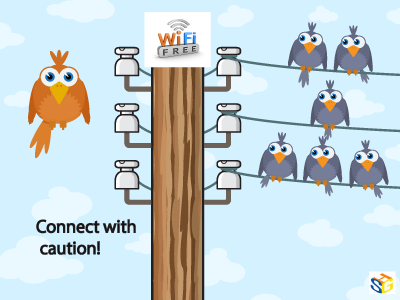
As much as we love to assume free Wi-Fi is secure, this is far from the truth. Because you are attaching to a service many others are connected to as well, without security measures, your device can be hacked, especially if the network is unencrypted. Because this encryption involves handing out a 26-character hexadecimal key to every individual wanting to use that network, most places opt for ease of access over security. And even with a secure network, your information is vulnerable to everyone else who has the password and is on the network.

This may not seem like such a big deal and many people don’t believe they have anything to hide on their personal devices, but remember what you use on those devices. Chances are your e-mail is attached as well as all other social media sites. You may have apps that track your finances or private messages to certain others that you would never want anyone else to see. Luckily, there are steps that can be taken to reduce and prevent any unwanted information grabbers from accessing your personal information.

To start, go through your computer’s settings in order to verify your operating system’s security functions are all set to offer the highest protection. Open up the Control Panel and double check that your Firewall is enabled for both private and public networks. Then, go to Network and Sharing to open Change advanced sharing settings. In here, you can turn off file and printer sharing and network discovery for public networks.

One of the most important things to watch for is HTTPS. Hypertext Transfer Protocol Secure ensures secure communication across the web. Many of the major email systems use this when you log in (as another layer of password protection) but drop the security as soon as the login is complete. To keep this going, HTTPS Everywhere is a browser extension that gives you a secure connection when browsing some of the more popular sites. It can also be programmed for other sites you like to visit that don’t use HTTPS.

Not every place on the internet provides the choice of HTTPS, and VPNs are there to fill in the security gap. Virtual Private Networks allows data to be sent and received through public access points as if it were directly connected to a secure network. Many businesses offer this for company devices, but if you are an individual looking for that kind of security, ProXPN is a free version that can be upgraded. Unfortunately, it limits your speed, but other choices include VPNBook, OpenVPN Shield Exchange, and OkayFreedom.

With these three steps implemented, secure public Wi-Fi can be achieved. No longer will you have to worry about connecting in an unsure environment with strangers, never knowing if your information is being stolen. With all of the options free of charge, it is also an affordable means of protecting yourself that only takes a little time and effort to implement and guarantee safety.


In Demand IT Skills

Password Management Tools

Net Neutrality for the Layperson

What are a few unique pieces of career advice that nobody ever mentions?

training details locations, tags and why hsg

A successful career as a software developer or other IT professional requires a solid understanding of software development processes, design patterns, enterprise application architectures, web services, security, networking and much more. The progression from novice to expert can be a daunting endeavor; this is especially true when traversing the learning curve without expert guidance. A common experience is that too much time and money is wasted on a career plan or application due to misinformation.

The Hartmann Software Group understands these issues and addresses them and others during any training engagement. Although no IT educational institution can guarantee career or application development success, HSG can get you closer to your goals at a far faster rate than self paced learning and, arguably, than the competition. Here are the reasons why we are so successful at teaching:

  • Learn from the experts.
    1. We have provided software development and other IT related training to many major corporations since 2002.
    2. Our educators have years of consulting and training experience; moreover, we require each trainer to have cross-discipline expertise i.e. be Java and .NET experts so that you get a broad understanding of how industry wide experts work and think.
  • Discover tips and tricks about Oracle, MySQL, Cassandra, Hadoop Database programming
  • Get your questions answered by easy to follow, organized Oracle, MySQL, Cassandra, Hadoop Database experts
  • Get up to speed with vital Oracle, MySQL, Cassandra, Hadoop Database programming tools
  • Save on travel expenses by learning right from your desk or home office. Enroll in an online instructor led class. Nearly all of our classes are offered in this way.
  • Prepare to hit the ground running for a new job or a new position
  • See the big picture and have the instructor fill in the gaps
  • We teach with sophisticated learning tools and provide excellent supporting course material
  • Books and course material are provided in advance
  • Get a book of your choice from the HSG Store as a gift from us when you register for a class
  • Gain a lot of practical skills in a short amount of time
  • We teach what we know…software
  • We care…
learn more
page tags
what brought you to visit us
Training/Buffalo,  Oracle, MySQL, Cassandra, Hadoop Database Training , Training/Buffalo,  Oracle, MySQL, Cassandra, Hadoop Database Training Classes, Training/Buffalo,  Oracle, MySQL, Cassandra, Hadoop Database Training Courses, Training/Buffalo,  Oracle, MySQL, Cassandra, Hadoop Database Training Course, Training/Buffalo,  Oracle, MySQL, Cassandra, Hadoop Database Training Seminar

Interesting Reads Take a class with us and receive a book of your choosing for 50% off MSRP.