Oracle, MySQL, Cassandra, Hadoop Database Training Classes in Training/Buffalo,

Learn Oracle, MySQL, Cassandra, Hadoop Database in Training/Buffalo and surrounding areas via our hands-on, expert led courses. All of our classes either are offered on an onsite, online or public instructor led basis. Here is a list of our current Oracle, MySQL, Cassandra, Hadoop Database related training offerings in Training/Buffalo: Oracle, MySQL, Cassandra, Hadoop Database Training

We offer private customized training for groups of 3 or more attendees.

Oracle, MySQL, Cassandra, Hadoop Database Training Catalog

cost: $ 495length: 1 day(s)
We all know - Big Data is here in a Big way. However, processing that data can still be a Big challenge. This ...
cost: $ 1190length: 3 day(s)
In this 3-day course, students will learn how to use Redis's data types efficiently to manage large data sets. Get an understanding why you should use Redis... Learn how to work with Redis data structures and Web applications support and maintenance Learn about Redis Web applications support and components... Learn how to use search-based applications and how to reduce memory use... Learn major ...
cost: $ 1090length: 3 day(s)
The Cassandra (C*) database is a massively scalable NoSQL database that provides high availability and fault tolerance, as well as linear scalability when adding new nodes to a cluster. It has many powerful capabilities, such as tunable and eventual consistency, that allow it to meet the needs of modern applications, but also introduce a new paradigm for data modeling that many organizations do ...
cost: $ 1090length: 3 day(s)
This course introduces the Apache Spark distributed computing engine, and is suitable for developers, data analysts, architects, technical managers, and anyone who needs to use Spark in a hands-on manner. The course provides a solid technical introduction to the Spark architecture and how Spark works. It covers the basic building blocks of Spark (e.g. RDDs and the distributed compute engine), as ...
cost: $ 1190length: 3 day(s)
This course provides an in-depth introduction to the Structured Query Language, or SQL. Students learn key concepts of relational databases and query design, and have extensive opportunities to write database queries. The course also introduces table design and database update statements. ...
cost: $ 790length: 2 day(s)
The Introduction to SQL with PostgreSQL course provides an in-depth introduction to SQL and relational databases, focusing on PostgreSQL as the database management system. The course covers essential topics such as querying and sorting data, filtering records with WHERE, advanced SELECT statements, subqueries, joins, unions, and conditional processing using CASE. Students will also learn to ...
cost: $ 1090length: 2 day(s)
The ability to write the SQL language the cornerstone of all relational database operations is essential for anyone who develops database applications. In this training course, you learn how to optimize the accessibility and maintenance of data with the SQL programming language, and gain a solid foundation for building, querying, and manipulating databases. ...

Cassandra Classes

cost: $ 2250length: 3 day(s)
The Cassandra (C*) NoSQL database is one of the most powerful and widely used non-relational databases available today. It is a fault tolerant, highly scalable database with tunable consistency that meets the demanding requirements of the "can't fail, must scale" systems driving growth for many of the most successful enterprises of today. However, along with that capability comes a new ...
cost: $ 2250length: 3 day(s)
The Cassandra (C*) NoSQL database is one of the most powerful and widely used non-relational databases available today. It is a fault tolerant, highly scalable database with tunable consistency that meets the demanding requirements of the "can't fail, must scale" systems driving growth for many of the most successful enterprises of today. However, along with that capability comes a new ...

Hadoop Classes

cost: $ 1590length: 3 day(s)
Implement Hadoop Solutions throughout the enterprise If you're ready to make the most out of massively scalable analytics, you need to know how to take advantage of Hadoop technologies. With this class, you'll learn how! It focuses on the architecture and approaches for building advanced, Hadoop-based enterprise applications, taking a deeper, code-level dive into delivering real-world solutions. ...

Linux Unix Classes

cost: $ 1890length: 3 day(s)
This course covers the essentials of deploying and managing an Apacheâ?¢ Hadoop cluster. The course is lab intensive with each participant creating their own Hadoop cluster using either the CDH (Cloudera's Distribution, including Apache Hadoop) or Hortonworks Data Platform stacks. Core Hadoop services are explored in depth with emphasis on troubleshooting and recovering from common cluster ...

MySQL Classes

cost: $ 490length: 1 day(s)
Covers advanced MySQL administration topics: replication, optimization and clustering. ...
cost: $ 1690length: 4 day(s)
This course introduces the Apache Spark distributed computing engine, and is suitable for developers, data analysts, architects, technical managers, and anyone who needs to use Spark in a hands-on manner. It is based on the Spark 2.x release. The course provides a solid technical introduction to the Spark architecture and how Spark works. It covers the basic building blocks of Spark (e.g. RDDs ...
cost: $ 790length: 2 day(s)
MySQL is the open source community's most popular Relational Database Management System (RDBMS) offering, and is a key part of LAMP Linux, Apache, MySQL, PHP/Perl/Python. Many Fortune 500 companies adopt MySQL to reap the benefits of an open source, platform-independent RDMS, such as simplifying conversion from other platforms and lowering database Total Cost of Ownership by 90%. This class walks ...
cost: $ 1290length: 4 day(s)
MySQL is the open source community's most popular Relational Database Management System (RDBMS) offering, and is a key part of LAMP Linux, Apache, MySQL, PHP/Perl/Python. Many Fortune 500 companies adopt MySQL to reap the benefits of an open source, platform-independent RDMS, such as simplifying conversion from other platforms and lowering database Total Cost of Ownership by 90%. This class ...
cost: $ 1190length: 3 day(s)
MySQL is the open source community's most popular Relational Database Management System (RDBMS) offering, and is a key part of LAMP/Linux/ Apache/MySQL/PHP/Perl/Python. Many Fortune 500 companies adopt MySQL to reap the benefits of an open source, platform-independent RDMS, such as simplifying conversion from other platforms and lowering database Total Cost of Ownership by 90%. This class ...

Oracle Classes

cost: $ 790length: 2 day(s)
In this class, students will learn how to create, retrieve, and manipulate objects in Oracle 10g Structured Query Language (SQL). Students will also be introduced to Oracle 10g database features and tools. ...
cost: $ 1190length: 3 day(s)
The Oracle 10g release has greatly enhanced the features and functionality of PL/SQL. Students will learn the fundamentals of the PL/SQL programming language. Students will write stored procedures, functions, packages, and triggers, and implement complex business rules in Oracle. Students will learn programming, management, and security issues of working with PL/SQL program units. Programming ...
cost: $ 2250length: 5 day(s)
In this class, students will learn how to create, retrieve, and manipulate objects in Oracle 10g Structured Query Language (SQL). Students will also be introduced to Oracle 10g database features and tools. The Oracle 10g release has greatly enhanced the features and functionality of PL/SQL. Students will learn the fundamentals of the PL/SQL programming language. Students will write stored ...
cost: $ 1190length: 3 day(s)
A Relational Database Management System (RDBMS) is a software system that allows you to create and manage a relational database. Minimum requirements for such a system are defined by both ANSI and ISO. PL/SQL is Oracle's Procedural Language for SQL. It is Oracle's database programming language for creating stored procedures, functions, database triggers, and object methods. PL/SQL can be used for ...
cost: $ 2250length: 5 day(s)
In this class, students will learn how to create, retrieve, and manipulate objects in Oracle 11g Structured Query Language (SQL). Students will also be introduced to Oracle 10g database features and tools. The Oracle 11g release has greatly enhanced the features and functionality of PL/SQL. Students will learn the fundamentals of the PL/SQL programming language. Students will write stored ...
cost: $ 790length: 2 day(s)
In this class, students will learn how to create, retrieve, and manipulate objects in Oracle 11g Structured Query Language (SQL). Students will also be introduced to Oracle 11g database features and tools. ...
cost: $ 1290length: 3 day(s)
A Relational Database Management System (RDBMS) is a software system that allows you to create and manage a relational database. Minimum requirements for such a system are defined by both ANSI and ISO. PL/SQL is Oracleâ??s Procedural Language for SQL. It is Oracleâ??s database programming language for creating stored procedures, functions, database triggers, and object methods. PL/SQL ...
cost: $ 890length: 2 day(s)
In this class, students will learn how to create, retrieve, and manipulate objects in Oracle 11g Structured Query Language (SQL). Students will be introduced to Oracle 12c advanced capabilities database which promote better performance, increased scalability and easier data management. ...
cost: $ 2250length: 5 day(s)
This class will develop the key fundamental skills necessary to be an Oracle DBA. Students will design and create a server using the Optimal Flexible Architecture (OFA),configure logical and physical structures, set up database and user security, add and administer users, and monitor and tune main server areas. Each student will create a toolkit of administration scripts for database management ...
cost: $ 2250length: 5 day(s)
This class will introduce the experienced Oracle DBA to the new features contained in Oracle Database 10g. As students are introduced to the various new features, labs will reinforce the material presented in this course. Once this course is completed, the student will have gained the foundational knowledge to begin to administer Oracle 10g databases. ...
cost: $ 2250length: 5 day(s)
In this class, students will learn how to create, retrieve, and manipulate objects in Oracle 10g Structured Query Language (SQL). Students will also be introduced to Oracle 10gdatabase features and tools. Students will go on to develop deeper insight into relational database design and RDBMS operation, learn concepts and specific SQL syntax for extended Oracle datatypes, learn analysis and ...
cost: $ 2250length: 5 day(s)
PL/SQL is Oracle's embedded procedural database language, allowing developers and administrators to write scripts, stored procedures, functions, packages, and database triggers which run in the optimized environment of the Oracle Database server. The Oracle 10g release has greatly enhanced the features and functionality of PL/SQL. This advanced course helps PL/SQL programmers take advantage of ...
cost: $ 1190length: 3 day(s)
In this class, students will develop deeper insight into relational database design and RDBMS operation, learn concepts and specific SQL syntax for extended Oracle datatypes, learn analysis and tuning techniques to increase SQL performance, and master advanced features of Oracle SQL for large data sets and data warehouses. ...
cost: $ 2250length: 5 day(s)
This class will develop the key fundamental skills necessary to be an Oracle DBA. Students will design and create a server using the Optimal Flexible Architecture (OFA), configure logical and physical structures, set up database and user security, add and administer users, and monitor and tune main server areas. Each student will create a toolkit of administration scripts for database management ...
cost: $ 1590length: 4 day(s)
This four day workshop will get students hands-on with all of the important new Oracle 11g features they will need. Students will start with upgrades and downgrades and move on to real application testing, diagnosability and failure repair. DBA features for memory management, flashback, tables, and new Enterprise Manager tabs will then be covered. The course covers new performance and security ...
cost: $ 2250length: 5 day(s)
This hands-on course teaches students all aspects of Oracle 11g RAC administration. Students will begin with a solid foundation in Oracle Clusterware and RAC architecture. Students will then install and configure both Clusterware and the database software, as well as cover the administration of both pieces of software using command line utilities. Important topics such as failover, flashback, and ...
cost: $ 790length: 2 day(s)
PL/SQL is Oracle's embedded procedural database language, allowing developers and administrators to write scripts, stored procedures, functions, packages, and database triggers which run in the optimized environment of the Oracle Database server. This advanced course helps PL/SQL programmers take advantage of language features, advanced techniques, and packages and facilities provided by Oracle ...
cost: $ 690length: 1 day(s)
This Oracle BI 11g (11.1.1.9) and Exalytics: New Features training explores the new features available in Oracle BI EE release 11.1.1.9.0. Expert Oracle University instructors will teach you how to work with new enhancements to Analyses, Dashboards, Oracle BI Administration Tool and Oracle BI Publisher. Learn To: - Create a BI Mobile App using Oracle BI Mobile App Designer. - Understand the ...
cost: $ 2800length: 5 day(s)
This Oracle BI 11g R1: Create Analyses and Dashboards course for Release 11.1.1.7.0 provides step-by-step instructions for creating Oracle BI analyses and dashboards in business intelligence applications. You'll begin by building basic analyses to include in dashboards, with more complexity as the course progresses. Learn To: - Build analyses and dashboards. - Build and use views and graphs in ...
cost: $ 690length: 1 day(s)
This Oracle BI 11g: Overview training begins with an introduction to fundamental concepts related to business intelligence and dimensional modeling. By participating in a combination of interactive instruction and hands-on exercises, you'll get an overview of the BI Administration Tool, BI Publisher, BI Applications and Exalytics. Learn To: - Identify the analytical business challenge and the ...
cost: $ 2800length: 5 day(s)
This Oracle BI 12c: Build Repositories training teaches you how to build and verify the three layers of an Oracle Business Intelligence (BI) repository, step-by-step. Expert Oracle University instructors will begin by teaching you how to use the Oracle BI Administration Tool to construct a simple repository. Learn To: - Construct the repository. - Import schemas. - Design and build logical ...
cost: $ 2800length: 5 day(s)
This Oracle BI 12c: Create Analyses and Dashboards course for Release 12.2.1 provides step-by-step instructions for creating Oracle BI analyses and dashboards in business intelligence applications. You'll begin by building basic analyses to include in dashboards, with more complexity as the course progresses. Learn To: - Build analyses and dashboards. - Build and use views and graphs in ...
cost: $ 690length: 1 day(s)
This course provides instructions and step-by-step procedures for the new features of Oracle Business Intelligence (BI) 12c, with an emphasis on system administration features and changes. This course is primarily intended for Oracle BI system administrators who are responsible for system configuration, system management, and life cycle operations. ...
cost: $ 1690length: 3 day(s)
This 3-day Oracle BI Applications: Implementation Using ODI training provides step-by-step procedures for installing, configuring, managing, and customizing Oracle Business Intelligence Applications and Oracle Business Intelligence Warehouse. It begins by exploring Oracle BI Applications components and architecture. Learn To: - Identify and describe the products, architecture and key components ...
cost: $ 1690length: 3 day(s)
This 3-day Oracle BI Publisher 11g training will help you build a foundation of understanding how to best leverage this solution. Through Classroom Training or Live Virtual Class Training, you'll learn the ins and outs of how to use this solution. Learn To: - Create data models by using the Data Model Editor. - Create BI Publisher reports based on data models. - Create report layouts by using ...
cost: $ 2400length: 5 day(s)
The single most important new capability introduced with the Oracle 12c release of the database is the multitenant database feature. With this technology, the Oracle database can be a full participant in a cloud computing-based application architecture. Even a traditional on-premise systems architecture can be dynamically and dramatically transformed as a result of this feature. Many traditional ...
cost: $ 2600length: 5 day(s)
This 5-day Boot-Camp teaches you the principal techniques and theories to design Essbase block storage databases. Block storage databases are deployed independently for budgeting, forecasting and planning, and as the underlying data storage and analytic engine for Hyperion Planning applications. ...
cost: $ 1690length: 3 day(s)
The typical Essbase project is a high visibility, high priority development project designed to enhance bottom line performance. This course will help you develop specific Essbase administrative skills so you're able to support these projects. Learn To: - Perform backup, recovery, application migration and task automation. - Optimize Essbase system caches. - Configure the block storage and ...
cost: $ 2260length: 4 day(s)
You learn the principles of aggregate storage database design, then how to build, load, report from, and manage aggregate storage databases, constructing the sixteen-dimension in-class database through a series of guided exercises. Learn to: - Design, develop, and deploy aggregate storage databases - Manage aggregate storage databases - Construct variance, mix, and other member calculations ...
cost: $ 1690length: 3 day(s)
This course, designed for individuals on the implementation team responsible for inline service development and RTD installation and administration, enables participants to perform tasks required to successfully configure and deploy RTD with their operational applications and leverage its provision of decisions as a service. Participants learn about inline services and the elements that support ...
cost: $ 2250length: 5 day(s)
This hands-on course teaches students all aspects of Oracle 10g RAC administration. Students will begin with a solid foundation in Oracle Clusterware and RAC architecture. Students will then install and configure both Clusterware and the database software, as well as cover the administration of both pieces of software using command line utilities. Important topics such as failover, flashback, and ...

Course Directory [training on all levels]

Upcoming Classes
Gain insight and ideas from students with different perspectives and experiences.

Blog Entries publications that: entertain, make you think, offer insight

Unless you have a great product, service or idea for which people are willing to wait, chances are highly likely that these potential clients will leave your website should your response time take too long to their incoming requests.  Ignore your application’s performance and you are more likely to be dumped by your users sooner than expected.
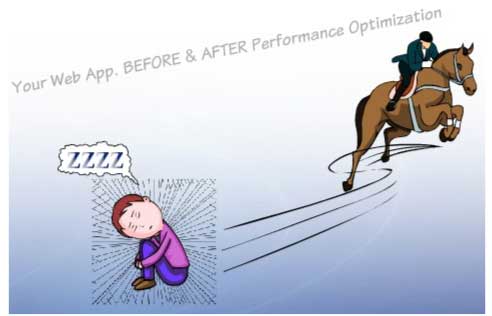
To improve the performance of an ASP.Net application you need to optimize your front-end UI (user interface) code as well as the back-end database. You can also think of the following tips as a brief best practices guide for the ASP.net performance optimization. So, whether you are a developer, UI designer or member of the deployment team, the following tips may help you. No matter what’s your role in the project or what you do to boost performance of your application, always remember that your goal should be to:

·          Minimize the amount of data you sent across the network.

·          Reduce the number of server requests.

Here you go (in no particular order)

At Database level

Millions of people experienced the frustration and failures of the Obamacare website when it first launched. Because the code for the back end is not open source, the exact technicalities of the initial failings are tricky to determine. Many curious programmers and web designers have had time to examine the open source coding on the front end, however, leading to reasonable conclusions about the nature of the overall difficulties.

Lack of End to End Collaboration
The website was developed with multiple contractors for the front-end and back-end functions. The site also needed to be integrated with insurance companies, IRS servers, Homeland Security servers, and the Department of Veterans Affairs, all of whom had their own legacy systems. The large number of parties involved and the complex nature of the various components naturally complicated the testing and integration of each portion of the project.

The errors displayed, and occasionally the lack thereof, indicated an absence of coordination between the parties developing the separate components. A failed sign up attempt, for instance, often resulted in a page that displayed the header but had no content or failure message. A look at end user requests revealed that the database was unavailable. Clearly, the coding for the front end did not include errors for failures on the back end.

Bloat and the Abundance of Minor Issues
Obviously, numerous bugs were also an issue. The system required users to create passwords that included numbers, for example, but failed to disclose that on the form and in subsequent failure messages, leaving users baffled. In another issue, one of the pages intended to ask users to please wait or call instead, but the message and the phone information were accidentally commented out in the code.

While the front-end design has been cleared of blame for the most serious failures, bloat in the code did contribute to the early difficulties users experienced. The site design was heavy with Javascript and CSS files, and it was peppered with small coding errors that became particularly troublesome when users faced bottlenecks in traffic. Frequent typos throughout the code proved to be an additional embarrassment and were another indication of a troubled development process.

NoSQL Database
The NoSQL database is intended to allow for scalability and flexibility in the architecture of projects that will use it. This made NoSQL a logical choice for the health insurance exchange website. The newness of the technology, however, means personnel with expertise can be elusive. Database-related missteps were more likely the result of a lack of experienced administrators than with the technology itself. The choice of the NoSQL database was thus another complication in the development, but did not itself cause the failures.

Another factor of consequence is that the website was built with both agile and waterfall methodology elements. With agile methods for the front end and the waterfall methodology for the back end, streamlining was naturally going to suffer further difficulties. The disparate contractors, varied methods of software development, and an unrealistically short project time line all contributed to the coding failures of the website.

Passbook is one of the newest features of the iPhone. What many people were offput by standards today is that we rely too much on disposable tickets, and the like, such as when you go to the airport for a boarding pass, or a movie ticket. Apple strove to solve that with a new application that is bundled with the newest update: Passbook.

Passbook offers everything you need, especially when a ticket, coupon, or gift card is needed. When you first open the application you are greeted by a sampling of applications that support Passbook, and its features. To begin, install the particular application you want to use. For example, we will be going with the Starbucks application to satiate our coffee needs every morning, as we have a gift card to spend.

Open up the freshly downloaded application, and get ready to be blown away. Like most applications, especially when it has to do with airlines, or coffee, you are almost always required to sign up for a respective account. Don’t worry, it is easy. All you will be asked is to fill out your email, a password, and other miscellaneous information to identify you when you lose your password or others.

Once you have finished signing up, you’re ready to roll. It will prompt you to enter a gift card that you already own, or begin a digital gift card. If you don’t have a gift card, you can start a digital gift card (or, as many may call it: a prepaid card), and pay for your coffee in a fast, and efficient way. Just tap on “Tap to Pay” when you are ready to pay, and tap again after you have paid. It’s really that easy.

Many individuals are looking to break into a video game designing career, and it's no surprise. A $9 billion industry, the video game designing business has appeal to gamers and non-gamers alike. High salaries and high rates of job satisfaction are typical in the field.

In order to design video games, however, you need a certain skill set. Computer programming is first on the list. While games are made using almost all languages, the most popular programming language for video games is C++, because of its object-oriented nature and because it compiles to binary. The next most popular languages for games are C and Java, but others such as C# and assembly language are also used. A strong background in math is usually required to learn these languages. Individuals wishing to design games should also have an extensive knowledge of both PCs and Macs.

There are many colleges and universities that offer classes not only in programming but also classes specifically on game design. Some of these schools have alliances with game developing companies, leading to jobs for students upon graduation. Programming video games can be lucrative. The average game designer's salary is $62,500, with $55,000 at the low end and $85,000 at the high end.

Programmers are not the only individuals needed to make a video game, however. There are multiple career paths within the gaming industry, including specialists in audio, design, production, visual arts and business.

Designing a video game can be an long, expensive process. The average budget for a modern multiplatform video game is $18-$28 million, with some high-profile games costing as much as $40 million. Making the game, from conception to sale, can take several months to several years. Some games have taken a notoriously long time to make; for example, 3D Realms' Duke Nukem Forever was announced in April 1997 and did not make it to shelves until July 2011.

Video game programmers have a high level of job satisfaction. In a March 2013 survey conducted by Game Developer magazine, 29 percent of game programmers were very satisfied with their jobs, and 39 percent were somewhat satisfied.

If you're interested in a game development career, now's the time to get moving. Take advantage of the many online resources available regarding these careers and start learning right away.

training details locations, tags and why hsg

A successful career as a software developer or other IT professional requires a solid understanding of software development processes, design patterns, enterprise application architectures, web services, security, networking and much more. The progression from novice to expert can be a daunting endeavor; this is especially true when traversing the learning curve without expert guidance. A common experience is that too much time and money is wasted on a career plan or application due to misinformation.

The Hartmann Software Group understands these issues and addresses them and others during any training engagement. Although no IT educational institution can guarantee career or application development success, HSG can get you closer to your goals at a far faster rate than self paced learning and, arguably, than the competition. Here are the reasons why we are so successful at teaching:

  • Learn from the experts.
    1. We have provided software development and other IT related training to many major corporations since 2002.
    2. Our educators have years of consulting and training experience; moreover, we require each trainer to have cross-discipline expertise i.e. be Java and .NET experts so that you get a broad understanding of how industry wide experts work and think.
  • Discover tips and tricks about Oracle, MySQL, Cassandra, Hadoop Database programming
  • Get your questions answered by easy to follow, organized Oracle, MySQL, Cassandra, Hadoop Database experts
  • Get up to speed with vital Oracle, MySQL, Cassandra, Hadoop Database programming tools
  • Save on travel expenses by learning right from your desk or home office. Enroll in an online instructor led class. Nearly all of our classes are offered in this way.
  • Prepare to hit the ground running for a new job or a new position
  • See the big picture and have the instructor fill in the gaps
  • We teach with sophisticated learning tools and provide excellent supporting course material
  • Books and course material are provided in advance
  • Get a book of your choice from the HSG Store as a gift from us when you register for a class
  • Gain a lot of practical skills in a short amount of time
  • We teach what we know…software
  • We care…
learn more
page tags
what brought you to visit us
Training/Buffalo,  Oracle, MySQL, Cassandra, Hadoop Database Training , Training/Buffalo,  Oracle, MySQL, Cassandra, Hadoop Database Training Classes, Training/Buffalo,  Oracle, MySQL, Cassandra, Hadoop Database Training Courses, Training/Buffalo,  Oracle, MySQL, Cassandra, Hadoop Database Training Course, Training/Buffalo,  Oracle, MySQL, Cassandra, Hadoop Database Training Seminar

Interesting Reads Take a class with us and receive a book of your choosing for 50% off MSRP.